As a crucial material in building curtain walls and decoration, the quality and performance of aluminum single-layer panels largely depend on a rigorous manufacturing process.From substrate preparation to final delivery, every step requires precise control to ensure the product meets requirements for strength, weather resistance, aesthetics, and safety.
The process begins with substrate selection and pretreatment. High-quality aluminum alloy coils or sheets are typically used as raw materials and cut according to design specifications. To ensure dimensional accuracy, CNC cutting equipment is often employed, reducing human error and improving production efficiency. After cutting, the edges are deburred and chamfered to prevent stress concentration or surface defects during subsequent processing. The shaping process then begins, using roller pressing or mechanical correction to ensure the panel's flatness meets process standards, laying the foundation for bending.
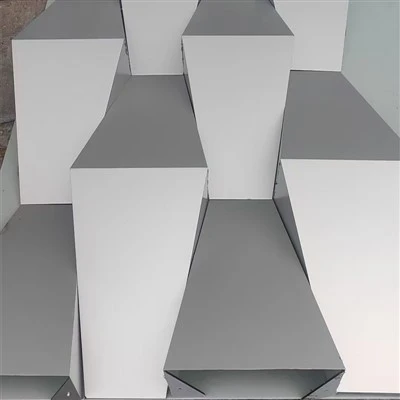
Bending is the key step determining the three-dimensional shape of the aluminum single-layer panel. Based on the design drawings, a CNC bending machine is used to process the panel at set angles and radii. For single-curved or simple zigzag structures, a single forming process is sufficient. For double-curved or complex irregular shapes, multi-stage forming is required, supplemented by mold support to ensure smooth surface transitions and consistent dimensions. This step necessitates angle pre-compensation based on material springback characteristics and verification after trial bending to ensure the stability of mass production.
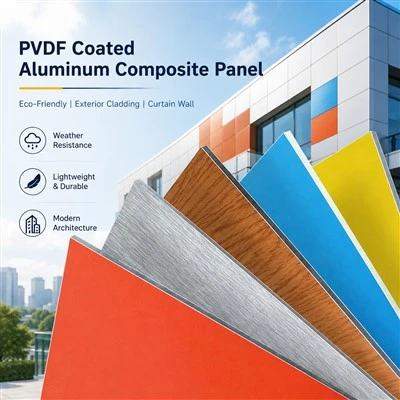
Surface treatment is the core process for improving the weather resistance and decorative effect of aluminum panels. Common processes include pre-treatment degreasing, acid or alkaline washing to remove scale, followed by chromating or passivation to enhance coating adhesion. Coating methods primarily include electrostatic powder coating and fluorocarbon liquid coating. The former offers rich colors and excellent environmental friendliness, while the latter excels in UV resistance and corrosion resistance. The spraying process requires strict control of ambient temperature, humidity, and spray distance. For multi-layer coatings, sufficient leveling and curing between layers are essential to form a uniform and dense film. Special effects such as wood grain transfer or stone grain spraying are achieved through heat transfer or color matching processes after the primer has cured.
The assembly and quality inspection stage handles the finished product. For panels requiring splicing or reinforcement, riveting or welding is performed according to the design. Welded areas must be ground smooth and coated with an anti-corrosion layer to maintain visual consistency. Finished products undergo multiple inspections, including dimensional verification, coating thickness testing, adhesion testing, and color difference comparison, before packaging. Packaging uses moisture-proof and scratch-resistant materials and is stored separately according to project batches to prevent damage during transportation.
Overall, the aluminum single-panel manufacturing process encompasses multiple steps, including material selection, cutting, bending, surface treatment, assembly, and quality inspection. These steps are interconnected and rely on precision equipment and mature technology. Only by strictly adhering to process standards can the product maintain excellent performance in complex environments over the long term, providing reliable protection for building decoration.