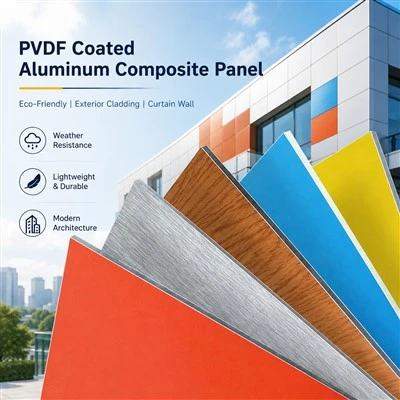
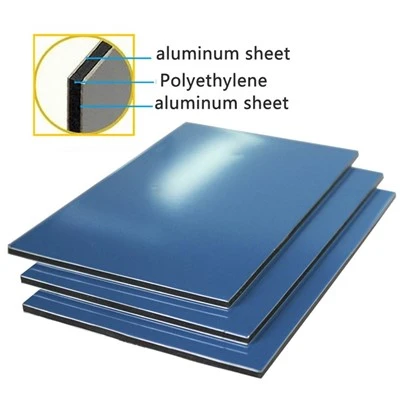
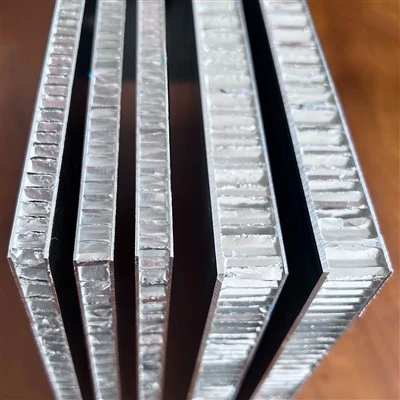
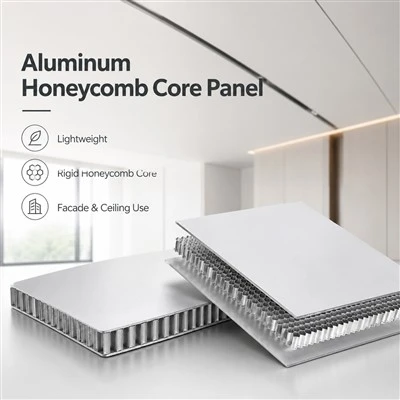
The widespread application of aluminum composite panels in building curtain walls, interior and exterior decoration, and other fields stems from the working mechanism formed by the organic combination of their internal structure and material properties. This panel is formed by high-temperature and high-pressure composite molding of two layers of aluminum alloy panels and a middle polymer core material. Each layer performs a specific function in the structure, and through interface bonding and synergistic effects, achieves a comprehensive performance of lightweight, high strength, weather resistance, aesthetics, and ease of processing.
From a structural mechanics perspective, the aluminum alloy panels have high strength and modulus, providing the main rigid support and bending resistance of the panel. When external loads are applied to the panel surface, the surface aluminum alloy first bears tensile and compressive stresses, and evenly transfers the load to the entire cross-section, thus avoiding local deformation or damage. The middle core material is mostly made of low-density polyethylene or its modified flame-retardant polymer materials. Although its strength is lower than that of metals, it has good toughness and energy absorption capacity. It plays the role of "shear connection" and "buffer isolation" in the structure, effectively bonding the two panels into a whole, and dispersing energy through plastic deformation under impact, reducing the risk of brittle fracture. In terms of thermal and acoustic properties, the low thermal conductivity of the core material gives the aluminum-plastic composite panel a certain degree of heat insulation, slowing down heat transfer across the sides of the panel and thus improving the energy efficiency of the building envelope. Its porous or foamed structure also blocks sound wave propagation, enhancing indoor sound insulation. This composite effect, resulting from the combination of different materials, allows the panel to achieve the goals of lightweight, heat insulation, and sound insulation simultaneously-achievements difficult to accomplish with a single material.
The working principle of the surface coating system is primarily reflected in its protective and decorative functions. The coating uses fluorocarbon or polyester resin as a matrix, which is cured at high temperatures to form a dense, continuous film that adheres tightly to the surface of the aluminum alloy panel. This film effectively blocks the erosion of ultraviolet rays, acid rain, salt spray, and industrial pollutants, preventing oxidation and corrosion of the metal substrate while maintaining color stability and gloss. The low surface energy of the coating also contributes to self-cleaning, reducing dust and stain adhesion and extending the appearance's lifespan.
The process principle of the composite process is equally crucial. Under high temperature and pressure conditions, the polymer core material is in a molten or semi-molten state, fully wetting the aluminum alloy panel and undergoing interfacial diffusion and mechanical anchoring to form a strong adhesive layer. This bonding relies not only on physical interlocking but also on a certain degree of chemical compatibility, making it difficult for the layers to delaminate or peel during long-term use.
In general, the working principle of aluminum composite panels is based on the complementary properties of metallic and non-metallic materials. Through a reasonable layered structure and interfacial bonding, the panel achieves a synergistic effect in terms of mechanical load-bearing capacity, environmental adaptability, thermal and acoustic insulation, and decorative protection. Understanding and applying this mechanism provides a scientific basis for engineering design, material selection, and performance optimization, enabling it to continue playing an important role in diverse architectural scenarios.