News Article: Aluminium Composite Cladding Rides Safety & Sustainability Upgrades to Record Global Market Growth in 2026
Published Date: August 2, 2026
Source: Global Construction Materials Journal
Category: Building Facade & Exterior Material Industry
Lead Paragraph
Fueled by tightened global fire safety codes, booming green building renovation projects and continuous coating technology iteration, aluminium composite cladding (ACP cladding) has witnessed robust worldwide demand growth in the first half of 2026. Latest market statistics from Data Bridge Market Research show the global ACP cladding market is valued at USD 7.43 billion in 2026, and is projected to surge to USD 12.77 billion by 2033 at a compound annual growth rate (CAGR) of 7.0%. Fire-retardant mineral-core panels, self-cleaning PVDF coating cladding and recyclable composite products have become the core growth engine reshaping the whole industry landscape.
Global Market Pattern: Asia-Pacific Leads Output, Europe & North America Push High-standard Upgrading
The Asia-Pacific region firmly holds the dominant position in the global ACP cladding supply chain, occupying over 41.5% of total market share in 2025. China remains the world's largest producer and exporter of aluminium composite cladding. Five mainstream Chinese manufacturers including Shanghai Jixiang, Zhejiang Jinxiang and Jiersun have expanded overseas production lines in Southeast Asia and the Middle East this year, coping with rising international orders for commercial building facades, stadium exterior walls and transportation hub cladding projects.
In European and North American markets, strict post-Grenfell fire regulations have thoroughly eliminated ordinary combustible PE-core cladding from high-rise and residential building facade bidding lists. A2 non-combustible inorganic core and B1 grade fire-resistant ACP cladding now account for nearly half of local market consumption, pushing premium product prices up 8%–12% year-on-year. Meanwhile, the EU's Renovation Wave strategy drives massive old building exterior retrofits; lightweight ACP cladding is widely preferred for building energy efficiency upgrades because it requires no large-scale reinforcement of original building structures. The Middle East and coastal Southeast Asia markets maintain steady demand for anti-corrosion, salt-fog resistant PVDF coated cladding, supported by large-scale urban landmark construction.
Core Industry Upgrades: Safety First, Functional & Eco Performance Double Improved
1. Fire safety becomes rigid entry threshold for engineering procurement
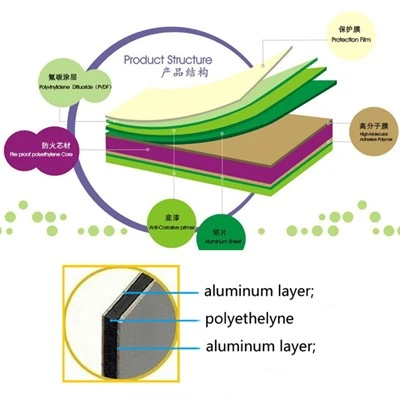
Fire-resistant aluminium composite cladding has turned from an optional high-end product into a mandatory specification for public and high-rise buildings globally. Industry data indicates the market scale of fire-proof ACP cladding will reach USD 1.25 billion by 2032 with a 6.3% CAGR. Traditional pure polyethylene core panels are only allowed for temporary low-rise sunshades and decorative signage at present. New-generation mineral-filled fire-resistant cores can effectively block flame spread and reduce toxic smoke release during combustion, fully complying with ASTM E84, EN 13501 and other mainstream international fire test standards.
2. High-performance coating technology reduces whole-life maintenance costs
Nano-modified PVDF and FEVE fluorocarbon coatings are rapidly popularized in exterior cladding products. More than 40% of newly launched ACP cladding is equipped with self-cleaning, anti-static and anti-graffiti surface treatment, which can resist ultraviolet aging, acid rain corrosion and surface dust accumulation, extending outdoor service life to 20–25 years and cutting routine cleaning expenses by over 60% for property management parties. Antibacterial coated aluminium composite cladding also gains stable demand growth in hospitals, schools and food processing plants, with market share rising 15% compared with pre-pandemic levels.
3. Circular production matches global low-carbon building targets
Aluminium skins of composite cladding can achieve 100% recycling recovery after service expiration. Leading manufacturers have optimized lamination processes to separate aluminium sheets and core materials with low energy consumption. In 2026, recycled aluminium raw materials have accounted for more than 45% of aluminium substrate usage in global ACP production, helping construction projects obtain LEED and other green building certification points smoothly. In addition, integrated BIPV photovoltaic composite cladding has begun small-scale application on commercial building facades, realizing building exterior decoration plus distributed power generation in one material solution.
Challenges the Industry Faces in 2026
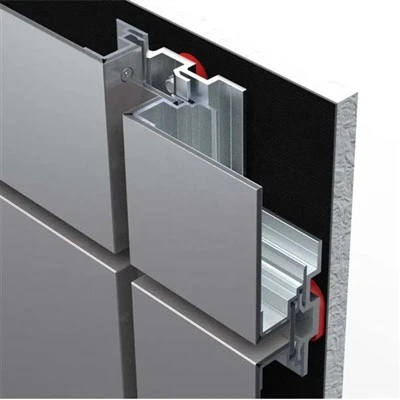
The whole sector is confronted with obvious supply chain volatility. Geopolitical tensions affect global primary aluminium trading and maritime logistics costs, pushing up raw material costs for cladding manufacturers worldwide, resulting in extended delivery cycles for bulk orders. On the terminal application side, irregular installation and sealing construction still cause facade water leakage problems for some low-quality projects, requiring construction contractors to standardize concealed dry-hanging installation techniques and neutral weather-resistant sealant selection specifications. Besides, small backward factories with outdated processes still flood the low-end market with uncertified inferior panels, bringing hidden risks to building safety.
Future Outlook for Aluminium Composite Cladding Industry
Industry analysts point out three clear development directions for the sector in the next five years. First, full-grade fire-proof products will realize full market penetration in formal construction projects. Second, intelligent functional cladding embedded with temperature and humidity sensing modules will become a new hot spot for high-end architectural exterior decoration. Third, modular prefabricated ACP cladding components will be widely matched with assembled buildings, shortening on-site construction period and lowering overall project comprehensive cost.
Against the background of global large-scale urbanization and low-carbon transformation, aluminium composite cladding, as a mature, cost-effective and diversified facade material, will keep stable growth momentum, with high-quality, certified and eco-friendly products becoming the absolute mainstream of international trade procurement.