JULY 12, 2026 - The global aluminum composite material (ACM) industry is witnessing accelerated technological innovation and robust market growth this year, as advanced material breakthroughs break traditional application bottlenecks and booming demand from green construction, aerospace, and new energy sectors fuels industrial expansion. With upgraded performance, optimized production processes and stricter low-carbon industry standards, aluminum composite materials are evolving into a core lightweight, high-strength and eco-friendly material for global high-end manufacturing and modern urban construction.
A landmark technological breakthrough has redefined the performance boundary of aluminum composite materials in high-temperature scenarios. Researchers from the Institute of Metal Research, Chinese Academy of Sciences, have successfully developed a new generation of high-strength, high-modulus aluminum composite materials that break the long-standing 300 ℃ service temperature limit of traditional ACM products. By adopting a novel defect-promoted Ti₂AlC MAX-phase internal decomposition mechanism, the research team fabricated multi-scale structured Al₃Ti/Al composites, which effectively solve the core problems of high-temperature interface degradation and matrix softening that have restricted the industrial application of aluminum composite materials for decades. This innovation enables ACMs to maintain stable mechanical properties under extreme high-temperature conditions, opening up new application possibilities in aerospace thermal structural components, high-speed transportation and high-end industrial equipment manufacturing .
Meanwhile, domestic research institutions continue to enrich the technical system of aluminum composite materials. A research team from Lanzhou University of Technology has developed heterogeneous-structured aluminum matrix composites with multi-scale dual reinforced particles, achieving an excellent balance of high strength and ductility. The relevant research results have been published in Composites Part B, a top-tier international composite journal, marking a key progress in the precise regulation of ACM microstructure and performance . In the field of processing technology, resistance-based sintering (RBS) technology has been applied to ACM production, realizing rapid consolidation of composite powders in a short time without complex protective atmosphere, greatly improving the production efficiency of high-performance aluminum composite materials such as Al-graphene and Al-carbon nanotube composites, and laying a foundation for large-scale industrial promotion .
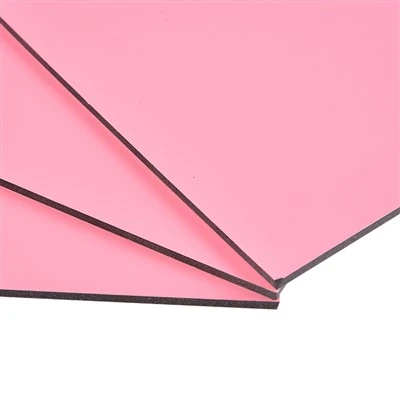
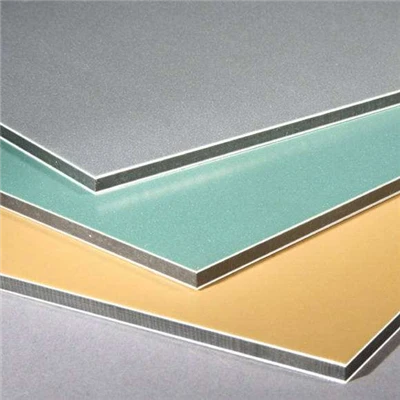
Technological iterations are backed by a rapidly expanding global market. According to the latest 2026 industry report from IndexBox, the global aluminum composite material market size reached USD 6.9 billion in 2025 and is projected to soar to USD 12.1 billion by 2033, with a steady compound annual growth rate. The market growth is mainly driven by two core factors: the global acceleration of urbanization and the continuous upgrading of building fire safety codes. As countries raise standards for building exterior wall materials, lightweight, fire-resistant, weather-resistant and easy-to-process aluminum composite panels have become the preferred materials for modern architectural decoration, commercial building renovation and urban public facility construction .
The new energy industry has become a new growth engine for aluminum composite material consumption. Industry data shows that with the lightweight transformation of new energy vehicles, the single-vehicle usage of aluminum composite materials in new energy models is rising rapidly. The penetration rate of high-performance ACMs in China's new energy vehicle and energy storage system sectors is expected to climb from 15% to 45% in the next five years, driving the domestic ACM market scale to surge from 12 billion yuan to 45 billion yuan. In addition, aluminum composite materials are gradually promoted and applied in high-voltage transmission conductors, replacing traditional aluminum alloys with better electrical conductivity and structural stability, further expanding the industrial application boundary .
Low-carbon transformation has also become a key development trend of the ACM industry in 2026. Driven by the European Union's Carbon Neutral Building Product Regulations (CPND), the global aluminum composite material industry is accelerating the layout of full-life cycle carbon traceability systems. Leading enterprises in the industry have launched full-series low-carbon ACM products, realizing precise control of carbon emissions from raw material processing, production and manufacturing to terminal application. Compared with traditional building materials, the new low-carbon aluminum composite materials reduce comprehensive carbon emissions by more than 28%, meeting the global green building and zero-carbon industrial development requirements .
In terms of market supply, Chinese ACM manufacturers are further enhancing their global competitiveness. Five leading domestic aluminum composite material enterprises have stood out in the global market, relying on stable product quality, advanced production technology and cost advantages. Their products are exported to Europe, Africa, Southeast Asia and other regions, and have successfully completed batch delivery projects in Togo and other African countries, continuously expanding the overseas market share of Chinese-made aluminum composite materials .
Industry analysts pointed out that the aluminum composite material industry has entered a golden period of structural upgrading from traditional low-end decoration materials to high-end functional structural materials. In the future, with further breakthroughs in high-temperature resistance, lightweight and low-carbon technologies, ACMs will be widely used in aerospace, new energy equipment, smart construction, high-speed rail transportation and other high-precision fields. Supported by global green development policies and downstream market demand, the aluminum composite material industry will maintain high-speed growth and continue to lead the innovation and upgrading of the global new material industry.