Aluminium Composite Panel Industry Advances with Fire Safety Upgrades and Sustainable Innovations in 2026
April 16, 2026 - The global aluminium composite panel (ACP) market is experiencing steady growth driven by stricter fire safety regulations, rising demand for sustainable building materials, and expanding applications across architecture, advertising, and industrial sectors. According to the latest market data, the industry is projected to reach $78.7 billion in 2026, with a compound annual growth rate (CAGR) of 5.55% through 2035, as urbanization and infrastructure development fuel demand worldwide.
A key focus of the industry in 2026 is the enhancement of fire safety performance, a response to global regulatory tightening. Governments and building authorities across regions have strengthened standards for exterior cladding materials, mandating higher fire-retardant grades for ACPs used in high-rise buildings and public spaces. In China, the core standard GB 8624-2012 governs fire safety ratings, classifying ACPs into B1 (flame-retardant) and A2/A (non-combustible) grades based on core materials, while applications also require compliance with GB/T 17748. For projects in North America and Europe, the NFPA 285 standard- which includes full-scale wall tests to simulate real fire scenarios-has become a critical requirement for high-rise installations.
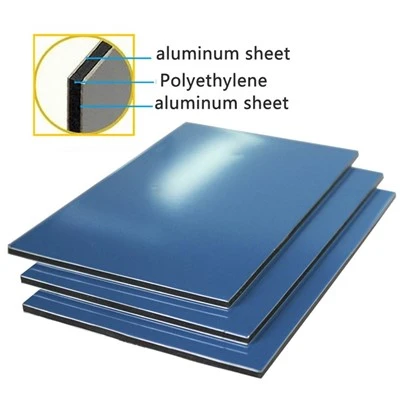
Manufacturers are responding by scaling up production of fire-retardant ACPs, with mineral-filled cores (such as aluminum tri-hydroxide and magnesium di-hydroxide) replacing traditional polyethylene (PE) cores to meet A2/A-grade standards. These advanced panels offer low flame spread indices and high heat resistance, making them suitable for high-rise buildings, airports, and commercial complexes. Industry data shows that fire-resistant ACPs now account for nearly 49% of new installations globally, a 30% increase in demand over the past five years.
Sustainability has also emerged as a driving force, with ACPs gaining traction for their recyclability and energy efficiency. Aluminum, the primary component of ACPs, boasts a global recycling rate exceeding 75%, aligning with circular economy goals. Leading manufacturers, including 3A Composites, Arconic, and China-based Sichuan Xinba and Alex New Materials, are introducing low-VOC coatings and recyclable core materials to reduce environmental impact. Additionally, ACPs' thermal insulation properties help lower building energy consumption, supporting green building certifications worldwide.
The versatility of ACPs continues to expand their application scope. In the advertising industry, their smooth surface, weather resistance, and lightweight design make them ideal for outdoor billboards, construction site hoardings, and indoor signage-accounting for approximately 15% of global ACP usage. In architecture, ACPs are widely used for building facades (65% of global consumption) and interior decoration, with digital printing and custom texturing technologies enabling personalized designs for commercial and residential projects. Industrial applications are also growing, with specialized ACPs (such as carbon-silicon aluminum composite panels) used in battery packs and 5G base station cooling modules.
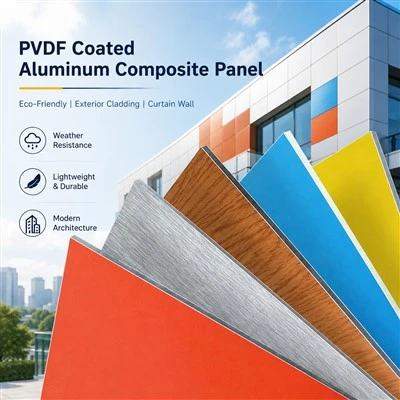
Regionally, the Asia-Pacific and Middle East markets lead growth, collectively accounting for 67% of global demand, driven by large-scale infrastructure and smart city projects. China's domestic manufacturers, such as Sichuan Xinba and Alex New Materials, have expanded their production capacity to over 300 million square meters annually, offering a full range of products from fire-resistant to decorative ACPs and providing one-stop services from design to installation. North America and Europe, meanwhile, focus on fire-safety retrofitting and sustainable material substitution, with PVDF-coated ACPs gaining popularity for their superior weather resistance.
Industry insiders note that while the market faces challenges-including competition from alternative materials like fiber cement boards and concerns over PE core recyclability-the focus on innovation will sustain growth. Future developments are expected to center on high-performance fire-retardant technologies, circular manufacturing processes, and energy-efficient coatings. As green building mandates expand and urbanization continues, ACPs are poised to remain a cornerstone material in modern architecture and industrial design, with the market projected to surpass $127.9 billion by 2035.