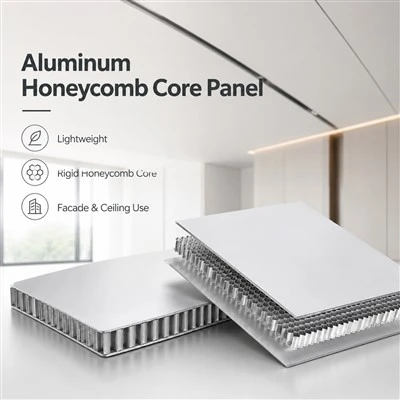
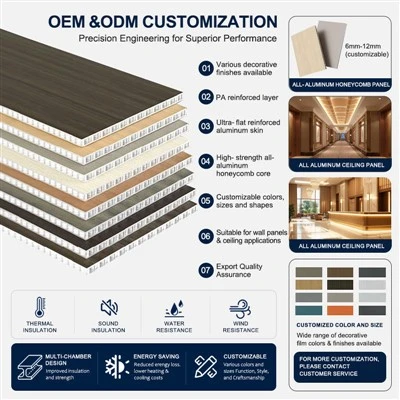
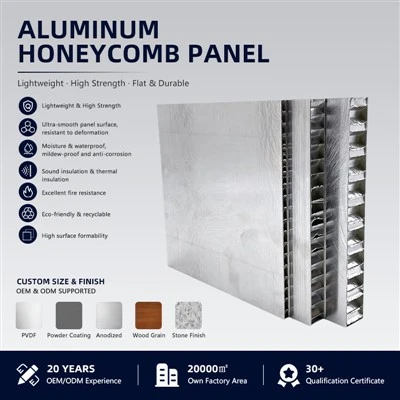
The comprehensive advantages of aluminum composite panels, including lightweight, high strength, weather resistance, and ease of processing, lie fundamentally in their scientifically sound composition method.This method organically combines carefully selected materials, layered construction, and composite processes, allowing different materials to perform their respective functions and complement each other within the structure, resulting in a well-balanced and widely applicable building decoration material.
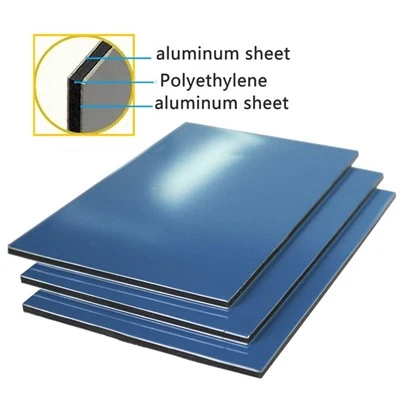
Structurally, aluminum composite panels generally consist of three main layers: upper and lower aluminum alloy panels, and a polymer core material in the middle. The upper and lower aluminum alloy panels are mostly made of rust-resistant aluminum or aluminum alloy series, with a thickness typically between 0.2 and 0.5 mm. Aluminum alloy possesses high strength and good toughness, providing rigid support and bending resistance for the panel, and is easy to cut, bend, and cold-form in subsequent processing to meet diverse shaping needs. Before lamination, the panels need to undergo degreasing, cleaning, and chemical conversion treatment (such as chromating or passivation) to form an active surface conducive to adhesion, improving the bonding strength with the core material.
The middle core material is key to achieving the lightweight and cushioning performance of the panel. Commonly used materials include polyethylene (PE), flame-retardant modified polyethylene, or other high-molecular polymers. Some high-end products use flame-retardant core materials filled with inorganic minerals to enhance fire resistance. The core material has low density and good toughness, which not only significantly reduces the overall weight but also absorbs energy upon impact, reducing the risk of brittle fracture, while also providing some heat and sound insulation. For applications with high fire resistance requirements, flame-retardant treatment of the core material is essential. This is achieved by adding flame retardants to the polymer or using a flame-retardant substrate to inhibit the spread of combustion and improve safety levels.
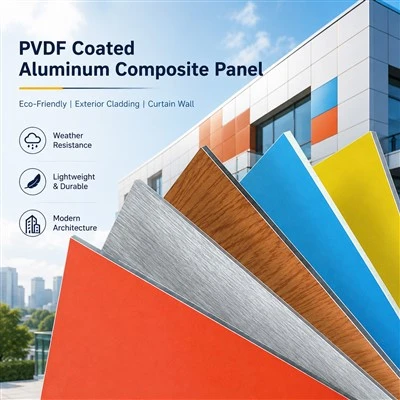
The surface coating system is a crucial source of the decorative and weather-resistant properties of aluminum-plastic composite panels. The coating typically uses fluorocarbon resin (PVDF) or polyester resin (PE) as the matrix. After pretreatment of the aluminum alloy panel, it is applied by electrostatic spraying or roller coating and cured at high temperature to form a continuous and dense film. Fluorocarbon coatings have high chemical stability, are resistant to ultraviolet rays, acids and alkalis, and have strong anti-pollution capabilities, making them suitable for long-term exposure to harsh outdoor environments. Polyester coatings offer a wide range of colors and moderate cost, and are mostly used indoors or in scenarios with relatively lower weather resistance requirements. The coating not only imparts diverse colors and textures to the panels but also prevents oxidation and corrosion of the metal substrate, extending its service life.
In terms of composition, the bonding of these three components relies on a high-temperature, high-pressure composite process. During production, pre-treated aluminum alloy panels and core materials are fed into a composite unit in a predetermined sequence. Under specific temperature (approximately 200°C) and pressure (several megapascals), the core material softens or melts, fully impregnating the microstructure of the aluminum alloy surface, forming a mechanically interlocked and partially chemically bonded adhesive layer. Subsequently, cooling, shaping, trimming, and inspection ensure the panels are flat, free of bubbles and delamination, and that their dimensions and performance meet design requirements.
Overall, the composition of aluminum composite panels is based on a layered structure of "metal panel-polymer core material-surface coating." Through strict material selection and composite process control, it achieves a synergistic improvement in strength, lightweight, weather resistance, and aesthetics. This scientific composition method lays the foundation for its wide application value in building curtain walls, interior decoration, and advertising signage, providing a reliable material solution for different environmental and functional needs.