News Release: Aluminum Composite Metal Panels Usher in Upgraded Competition Era Driven by Safety, Sustainability & Supply Chain Restructuring
Release Date: August 2, 2026
Source: Global Facade Materials News
Category: Construction Materials & Global Building Supply Chain
Lead
Against the backdrop of global building safety rectification, low-carbon construction popularization and raw material supply chain volatility, the global aluminum composite metal panel (ACM/ACP) industry is undergoing comprehensive reshuffling in product structure, market layout and technical routes. Latest statistics from Data Bridge Market Research show the global ACM market scale reached USD 7.43 billion in 2026, with a CAGR of 7.0% expected from 2026 to 2033, hitting USD 12.77 billion at the end of the forecast period. Fire-resistant inorganic core panels, recycled aluminum raw material products and PVDF high weather-resistant coated panels have become the core growth pillars, while traditional combustible PE-core ordinary panels are being gradually restricted in mainstream engineering bidding worldwide.
Global Market Layout: Asia-Pacific Dominates Production Capacity, Developed Markets Force High-standard Iteration
The Asia-Pacific region occupies more than 41.5% of the global ACM market share and firmly holds the core position of global production and export supply chain. China remains the world's largest producer and exporter of aluminum composite metal panels. Five mainstream Chinese manufacturers including Jiersun, Shanghai Jixiang and Zhejiang Jinxiang have accelerated the layout of overseas processing bases in Southeast Asia and the Middle East in the first half of 2026 to cope with surging orders for commercial facades, transportation hubs and municipal landmark buildings in emerging markets, alleviating the cost pressure brought by long-distance bulk shipping of finished panels.
Europe, North America and Australia have formed a strict high-barrier market ecosystem driven by post-Grenfell fire codes. Local building codes have explicitly prohibited pure PE composite panels for high-rise external wall cladding; B1 flame-retardant mineral core and A2 non-combustible ACM products now account for nearly half of the local consumption volume, pushing the unit price of high-standard finished panels up 8%–12% year-on-year. Supported by large-scale urban renewal and building energy-saving renovation plans launched by the EU, lightweight ACM panels are widely used in old building exterior upgrading projects for their advantages of low load increase and convenient on-site construction. Meanwhile, coastal markets in the Middle East and Southeast Asia maintain stable demand for salt-fog resistant PVDF aluminum composite panels under the wave of new city construction.
Product Technology Upgrade: Safety Is the Hard Threshold, Functional & Green Innovation Accelerates
Fire resistance upgrades from optional configuration to mandatory procurement indicator
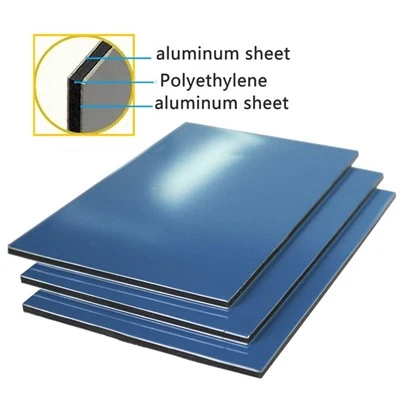
Fire-proof ACM products contributed 47.8% of the industry revenue in 2025, and the proportion will break 53% by 2033. New-generation mineral-filled flame-retardant cores can effectively block flame spread and reduce toxic smoke emission during combustion, fully complying with mainstream certification standards such as ASTM E84 and EN 13501. At present, ordinary polyethylene core panels are only allowed for low-rise interior decoration, billboard substrates and temporary exhibition facilities, and the market space is continuously compressed by regulatory policies. Global head brands such as ALPOLIC have launched A1-grade fully non-combustible composite metal panels, occupying the high-end market of airports, hospitals and super high-rise buildings.
High-performance coatings reduce whole-life cycle operation cost of buildings
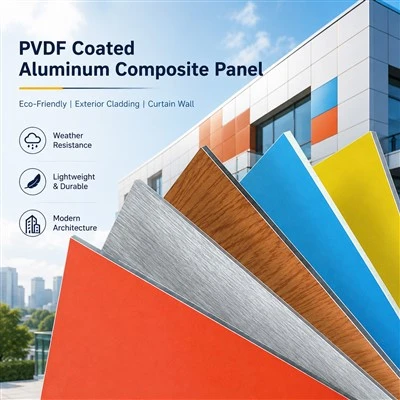
PVDF fluorocarbon coating has become the standard matching material for external wall ACM panels, occupying 65.2% of the exterior panel market share, with stable color and anti-aging performance lasting 15–25 years outdoors, far exceeding the 6–8 years service life of ordinary polyester coating. Nano-modified self-cleaning, anti-graffiti and antibacterial functional coatings have been widely promoted; antibacterial aluminum composite panels have grown by 15% in the medical and education building market in the past two years, effectively lowering later property cleaning and maintenance costs. Digital thermal transfer wood grain, stone grain and metal brushed textures further expand the architectural design expression space of composite panels.
Circular manufacturing becomes a new competition track for mainstream manufacturers
Driven by LEED, BREEAM and other green building certification systems, manufacturers are vigorously popularizing recycled aluminum substrates and low-VOC hot-pressing bonding processes. Recycled aluminum materials have accounted for more than 45% of the aluminum skin raw material consumption of mainstream ACM factories in 2026. The separable composite process realizes the classified recovery of aluminum sheet and core material after the panel is scrapped, greatly improving the material recycling rate and matching the global carbon peaking and carbon neutrality goals. In addition, photovoltaic integrated aluminum composite metal panels have achieved small-scale demonstration application on the facades of zero-carbon office buildings, realizing dual functions of building enclosure decoration and distributed power generation.
Industry Headwinds: Raw Material Shocks & Low-end Homogenization Restrict Healthy Development
The global ACM supply chain faces obvious short-term risks triggered by geopolitical conflicts. The Strait of Hormuz transportation disturbance and the shutdown maintenance of large aluminum smelters in the Gulf region have caused tight supply of primary aluminum, pushing up the production cost of composite panels, and bulk order delivery cycles have been generally extended by 2–4 weeks. In addition, the industry is highly fragmented; a large number of small backward factories rely on ultra-thin aluminum skins, fake PVDF coatings and shoddy flame-retardant cores to carry out vicious price competition, bringing hidden dangers to building facade safety and triggering negative market perception of low-cost aluminum composite panels in some regions. Irregular grooving, sealing and dry-hanging construction on site also cause frequent water leakage problems of facade projects, which become the main pain point complained by project owners.
Industry Outlook for the Next Three Years
Industry analysts judge that the aluminum composite metal panel industry will present three major development trends. First, full-spec fire protection compliance will realize full coverage in formal construction projects, and safety certification will become the primary access condition for overseas bidding. Second, modular prefabricated ACM components will be deeply bound with assembled buildings to improve construction efficiency and reduce comprehensive project costs. Third, leading enterprises will realize vertical integration of raw material processing, panel production and engineering supporting services, gradually eliminate low-end backward production capacity, and the industry concentration will continue to increase.
With the continuous advancement of global urban infrastructure construction and building energy-saving transformation, aluminum composite metal panels, as cost-effective multi-functional enclosure materials, will maintain steady growth in market scale. High-quality, certified, eco-friendly and customized composite panel products will firmly occupy the mainstream of global trade procurement, becoming an indispensable important material for modern architectural facade aesthetics and building safety guarantee.