Aluminum ceilings are favored in modern architectural decoration not only for their excellent physical properties but also for their ability to flexibly meet the aesthetic needs of diverse spaces.Through diverse form designs and meticulous surface treatments, aluminum ceilings present a visually orderly and artistic feel, shaping a unique temperament and style for both indoor and outdoor environments.
From a structural perspective, the appearance characteristics of aluminum ceilings are primarily reflected in their rich design language. Common flat ceilings are characterized by simple geometric planes, smooth and clean surfaces, and clean lines, suitable for creating a modern, minimalist, clean, and bright atmosphere. Perforated ceilings form regular or varied perforation patterns on the surface, maintaining overall continuity while creating subtle visual layers through light and shadow penetration, adding dynamism and transparency. Shaped aluminum ceilings can be rolled or molded into curved, wave-like, grid-like, and irregularly shaped three-dimensional structures, breaking through the limitations of planar surfaces and enhancing the dynamism and sculptural quality of the space, often used in public and cultural venues where a prominent design theme is needed.
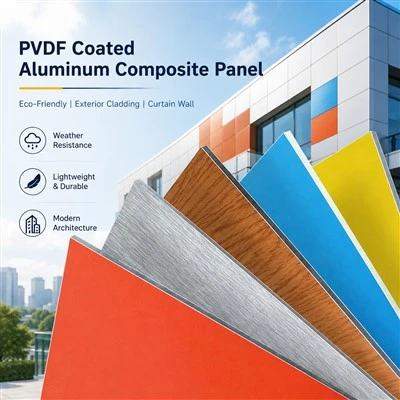
In terms of surface texture, aluminum ceilings exhibit exceptional versatility. Spray coating can achieve uniform solid or gradient colors with rich hues and strong weather resistance, easily coordinating with the overall interior color scheme. Film coating processes can realistically replicate natural and artificial textures such as wood grain, stone grain, and metal grain, giving the ceiling a warm or substantial feel while maintaining the lightweight durability of aluminum. Anodizing presents a delicate metallic luster and matte or glossy finish, with a stable color and a highly technological feel, suitable for high-end business and industrial-style spaces.
The interplay of light and shadow is also an important component of the aesthetic characteristics of aluminum ceilings. Perforated and grid-type panels can produce rich variations in light and shadow and projection effects under lighting, enhancing the rhythm and depth of the space; mirrored or highly reflective coatings can expand the visual space, making the interior appear more open and bright. Through different panel arrangements and seam treatments, regular geometric compositions or irregular visual rhythms can also be formed, further reinforcing the decorative theme.
Overall, aluminum ceilings combine diverse forms, malleable textures, and expressive power of light and shadow. They can respond to the design needs of different spaces with a simple, refined, or dynamic visual language, achieving a high degree of unity between function and aesthetics, and becoming a highly expressive element in modern architectural ceiling decoration.