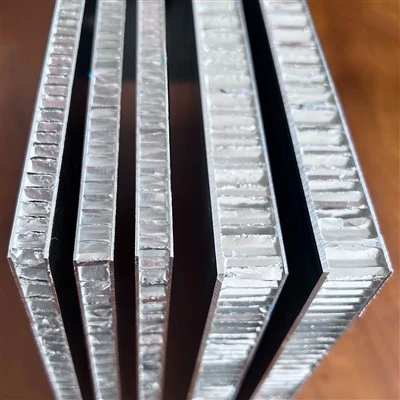
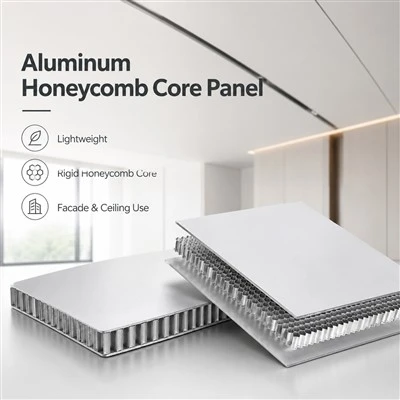
Aluminum honeycomb panels, due to their lightweight, high strength, excellent flatness, and comprehensive performance in sound and heat insulation, have been widely used in building curtain walls, transportation, shipbuilding, and high-end decoration. To fully utilize their advantages and ensure project quality, scientific and standardized operating methods must be followed in processing, handling, installation, and maintenance to reduce material damage and ensure structural safety and appearance quality.
In the processing stage, precision and protection are paramount. Aluminum honeycomb panels can be cut, grooved, bent, and drilled, but appropriate tools and parameters must be selected. Cutting should preferably use CNC precision cutting equipment or a sharp saw blade, and the feed speed and cooling conditions should be controlled to prevent high-speed friction from causing the panel to overheat, leading to coating degradation or core material softening and deformation. Bending operations should be carried out on a dedicated mold, with the bending radius reasonably determined, and a flexible protective layer added to the stress surface to prevent the panel from being directly stressed, causing dents or core material crushing. Drilling locations should avoid weak points in the honeycomb wall. The hole diameter and countersunk head type must match the fasteners. During drilling, use a vacuum cleaner or air blower to promptly remove debris to prevent clogging of the honeycomb cells and affecting structural stability. After processing, the panel surface must be cleaned immediately, and the edges and coating integrity checked; any problems corrected promptly.
Handling and storage methods emphasize damage prevention and stability. Although aluminum honeycomb panels are lightweight, large-size panels have a large area and limited rigidity. During handling, use dedicated suction cups, soft straps, or multi-point brackets to avoid single-point stress or dragging that could cause creases and surface scratches. During transportation, panels should be laid flat, separated by flexible padding, and secured with fastening straps to prevent slippage. Storage areas must be flat, well-ventilated, and protected from rain, avoiding contact with corrosive media such as acids and alkalis. Stacking height should be calculated based on panel thickness and strength to prevent deformation of the bottom layer under pressure.
Installation methods must balance structural stability and attention to detail. Select the dry-hanging, adhesive, or slot fixing method based on design requirements and load conditions. The dry-hanging system should ensure accurate keel positioning and secure connections, and be equipped with adjustable supports to accommodate civil engineering deviations and thermal expansion and contraction. The width of the panel joints should be uniform, and corners and edges should be finished with specialized profiles or metal strips, and sealant should be applied to ensure water tightness. For large-area installations, segmented construction and stress relief measures are recommended to prevent panel deformation or joint cracking caused by environmental temperature changes. High-altitude operations must strictly adhere to safety regulations, using stable working platforms and protective facilities to prevent panel slippage or falls that could cause injury.
Maintenance and operation methods emphasize regular inspections and scientific cleaning. A periodic inspection system should be established, focusing on checking the integrity of the panel coating, the sealing of panel joints, and the tightness of fasteners. When cleaning, use a neutral detergent and a soft sponge or low-pressure water flow, cleaning from the top of the panel downwards section by section to avoid wastewater flowing down the panel surface and causing secondary pollution. In coastal or highly polluted areas, cleaning frequency should be increased, and salt and corrosive deposits should be removed promptly. Local coating damage should be repaired by professionals as soon as possible to prevent the core material from becoming damp or oxidized.
In general, the operation methods for aluminum honeycomb panels cover the entire process of processing, handling, installation, and maintenance, emphasizing precision control, safety awareness, and structural safety. Strict adherence to standardized procedures not only effectively reduces material waste and construction risks but also ensures that the panels maintain excellent mechanical and aesthetic properties throughout their service life, providing a solid foundation for project quality and long-term operation.