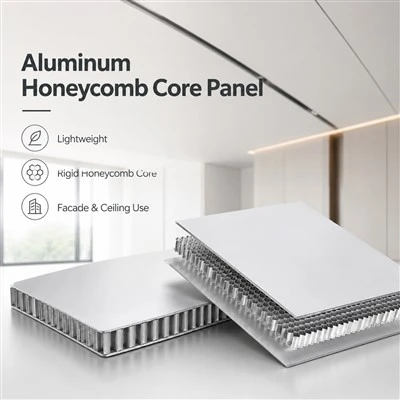
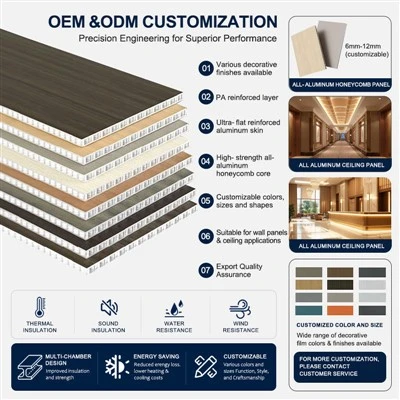
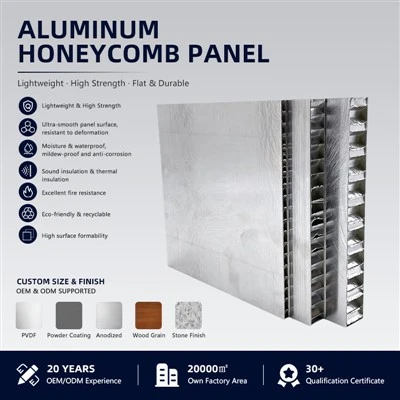
Aluminum ceilings, with their lightweight, high strength, corrosion resistance, ease of processing, and rich decorative effects, have become an important choice for modern building ceiling decoration.Based on their structural form, surface treatment, and functional characteristics, aluminum ceilings can be divided into several categories, each with its own advantages in application scenarios and visual effects, providing designers and contractors with flexible combinations.
From a structural form perspective, common types include flat, perforated, and shaped aluminum ceilings. Flat ceilings have a simple structure and a smooth surface, suitable for creating a clean and modern space, and are widely used in offices, shopping malls, and corridors. Perforated ceilings have regular or irregularly shaped holes processed on the aluminum sheet, combining decorative and sound-absorbing functions, improving the indoor acoustic environment while maintaining aesthetics; they are commonly found in theaters, conference rooms, and transportation hubs. Shaped ceilings are formed by roll forming, creating curved surfaces, waves, or geometric concave and convex shapes, possessing a three-dimensional feel and artistic appeal; they are often used in high-end commercial spaces, hotel lobbies, and exhibition venues to enhance the visual hierarchy of the space.
Based on surface treatment processes, aluminum ceilings are mainly categorized into spray-coated aluminum ceilings, film-coated aluminum ceilings, and anodized aluminum ceilings. Spray-coated aluminum ceilings offer a rich variety of colors and strong weather resistance, with color schemes customizable to match interior design styles. Film-coated aluminum ceilings have a high-polymer film coating on the surface, resulting in a fine texture that mimics natural wood and stone grains, while also offering wear resistance and easy cleaning. Anodized aluminum ceilings undergo electrochemical oxidation to form a dense oxide film, resulting in a stable color and excellent scratch resistance, making them suitable for public spaces with high durability requirements.
Functional categories are also important, such as integrated lighting aluminum ceilings, fire-resistant and heat-insulating aluminum ceilings, and antibacterial aluminum ceilings. Integrated lighting ceilings integrate lighting fixtures with the panel design, simplifying construction and improving the overall lighting environment. Fire-resistant and heat-insulating ceilings have flame-retardant or heat-insulating materials laminated to the back of the aluminum panel, improving building safety and energy efficiency. Antibacterial ceilings use antibacterial coatings or materials to inhibit bacterial growth, making them suitable for hygiene-sensitive environments such as medical and food processing facilities.
Overall, the category system of aluminum ceilings integrates multi-dimensional innovations in structure, technology, and function, and can provide precise solutions for the aesthetic, acoustic, safety, and environmental protection needs of different spaces, continuously expanding the breadth and depth of its application in modern architectural decoration.